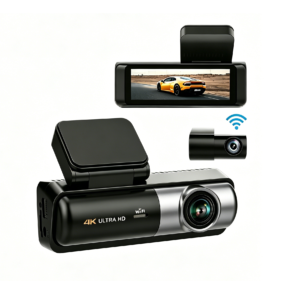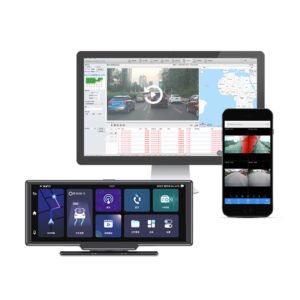

A dash cam lives in the harshest electronics environment in the car: behind the windshield, where a sunny parking spot pushes temperatures to 70–90 °C. How the device stores its backup energy determines whether it survives that climate — this single component choice separates serious dash cams from summer fodder.
Why There Is a Power Store at All
The dash cam runs from the car’s switched power. The internal store has one critical job: keep the camera alive long enough to finish and close the current video file when power is cut — in a collision, or when the ignition is switched off. Ten to thirty seconds of graceful shutdown, plus event buffering for the G-sensor.
Lithium Battery: Capable but Climate-Limited
- Cheaper per unit of energy and works well in moderate climates;
- Chemistry degrades fast above 60 °C: capacity loss and swelling within one to two summers;
- Swollen cells press against the housing — a known cause of warped dash cams and, in rare cases, thermal events;
- Air-freight and certain market certifications add logistics cost for lithium-containing devices.
Supercapacitor: the Industry Standard for a Reason
- Temperature-tolerant — typically rated −30 to +85 °C, exactly matching windshield reality;
- 500,000+ charge cycles vs ~500 for lithium — the capacitor outlives the camera;
- No thermal-runaway chemistry: safer in an unattended, sun-baked cabin;
- Lower energy density — perfect for a device that only needs seconds of backup, not hours.
The trade-off is cost at purchase and the fact that a supercapacitor unit cannot run long on internal power — which is precisely why serious parked-surveillance designs use hardwiring or an external battery pack instead of relying on the internal store.
What Distributors Should Specify
For any market with real summers — Middle East, Southeast Asia, Australia, southern Europe, US Sun Belt — make supercapacitor power storage a hard requirement in the RFQ, and ask for the operating-temperature test report. Our consumer line (YS14, YS15, YS16) is supercapacitor-based for exactly this reason. For 4G fleet units that need standby time while parked, a lithium pack is acceptable when paired with quality cells and a metal heat-shield — that is a deliberate design decision, not a cost saving.
Frequently Asked Questions
Do supercapacitor dash cams work when the car is off?
Only for seconds — enough to close files and buffer an event. Parked surveillance requires hardwire kits, OBD power or an external battery; the capacitor is a safety buffer, not a running battery.
How long does a supercapacitor last?
Typically rated for 500,000 cycles and 10+ years — it will outlast the camera itself. Lithium cells in dash cams usually degrade noticeably within 1–2 years of hot-climate use.
Is a swollen dash cam battery dangerous?
Treat it as such: stop using it, do not puncture or charge it further, and dispose of it at a battery recycling point. Swelling means the cell has been overheated and damaged.
Looking for a Dash Cam Supplier?
Yeshi Tech manufactures consumer and 4G fleet dash cameras for wholesale, OEM/ODM and private-label partners worldwide. Browse our full product range or request a quote — our engineers respond within one business day.