Most dash cams record one direction. A 4-channel dash cam records four at once — turning the vehicle into a fully monitored bubble instead of a single forward-facing witness. That sounds like overkill until you realize how many incidents happen behind, beside, or inside the vehicle. Here is exactly what a 4-channel system covers, what it is used for, and who actually needs one — versus who is better served by 1, 2 or 3 channels.
What “4-Channel” Actually Means
A channel is one camera feed. A 4-channel dash cam records four synchronized feeds simultaneously, usually arranged as:
- Front — road ahead through the windshield (the highest-resolution channel, often 4K).
- Rear — road behind, via a camera on the rear window or license-plate mount; covers rear-end collisions and tailgating fraud.
- Cabin / driver — interior view, usually with infrared (IR) night vision; records the driver, passengers and load area.
- Side / second interior — the fourth channel covers left or right blind-spot views, a trailer/cargo area, a second cabin angle (e.g. passenger compartment in a bus), or an exterior load view on trucks.
All four write to one recorder with synchronized timestamps, so an incident can be reconstructed from every angle as a single, consistent piece of evidence. For how this compares to smaller setups, see our 1CH vs 2CH vs 3CH vs 4CH channel guide.
What Is a 4-Channel Dash Cam Used For?
1. Complete accident evidence — including the angles claims fight over
Roughly a third of collisions involve the rear or side of the vehicle, and liability disputes hinge on what the other driver did behind or beside you. Four channels leave no direction unrecorded: the lane-change that became a sideswipe, the tailgater who braked late, the car that disappeared into a blind spot.
2. Rideshare, taxi and passenger disputes
For taxi and rideshare fleets, the cabin channel is at least as valuable as the road cameras. It settles passenger complaints (alleged dangerous driving, fare disputes, alleged misconduct), records assaults or abuse against drivers, and — with IR — does it clearly at night. The fourth channel can cover the rear passenger compartment that a single cabin cam misses in larger vehicles.
3. Driver monitoring and coaching (DMS)
The driver-facing channel feeds DMS (Driver Monitoring System) AI: fatigue, yawning, distraction, phone use, smoking, seatbelt — with real-time in-cab alerts and reports to the fleet platform. This is the channel with the biggest measurable impact on accident rates (how fleet dash cams help management).
4. Cargo, trailer and load security
Trucks, box vans and refrigerated transport point the fourth channel at the cargo doors, trailer or load bed — catching theft, unauthorized access, and what actually happened during loading/unloading disputes.
5. High-risk and regulated transport
Coaches and buses (passenger safety compliance), hazardous-materials transport, construction and mining vehicles, cash-in-transit and executive protection vehicles all routinely specify 4 channels because no blind spot is acceptable and liability exposure is high. Insurers increasingly expect this level of coverage.
6. Anti-fraud and staged accidents
“Brake-check” scams and deliberate side-swipes are designed around the assumptions of a single forward camera. Multi-angle footage collapses them.
What a 4-Channel System Looks Like in Practice
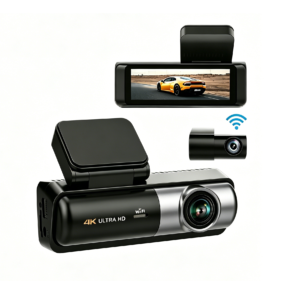
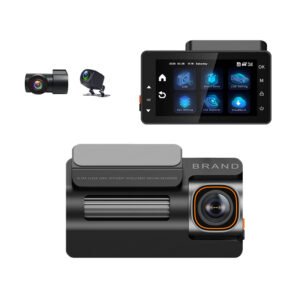
- One main DVR unit (usually windshield or dash mounted, hardwired) connected to up to four camera heads by cable — the small remote cameras mount on rear glass, sides or interior trim.
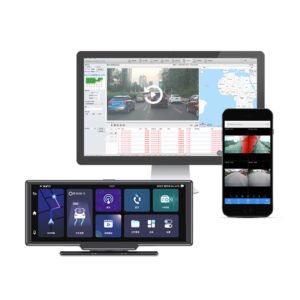
- 4G-connected fleet models stream all feeds or event clips to a cloud platform (such as CMSV6) with GPS and alerts — see how 4G dash cams work.
- Storage and power scale up: four channels need a large high-endurance card (or built-in eMMC storage on premium fleet units) and a hardwire/fuse-box install rather than a cigarette plug.
Who Needs 4 Channels — and Who Doesn’t
- Go 4-channel if you run trucks, buses/coaches, taxis or rideshare fleets, carry valuable cargo, operate in high-risk environments, or are an insurer/telematics partner requiring complete evidence. This is also where AI (ADAS + DMS) typically gets specified — see why fleets are moving to AI cameras.
- 3 channels (front + rear + cabin) is enough for most rideshare owner-drivers, vans and smaller commercial vehicles — e.g. the 2K triple-channel 4G fleet DVR, or personal-grade triple cams like the YS15 4K triple channel with Sony IMX675 and the YS13 front/rear/interior.
- 2 channels (front + rear) covers the vast majority of private drivers; 1 channel is minimal-budget only. A private car almost never needs a 4-channel rig — the extra cameras, wiring and platform cost are not justified by the use case. If you are buying for yourself, start with the dash cam buying checklist.
Our 4-Channel Models
- YC06 — 4G 4-Channel Fleet Dash Cam: current flagship with CMSV6 live streaming, GPS and optional ADAS/DMS — the default 4-channel choice for fleet deployments (launch details here).
- 4-Channel AI Fleet Cam with DMS + ADAS: maximum coverage plus full AI for high-risk operations and safety-first fleets.
Bottom Line
A 4-channel dash cam is used to eliminate blind spots — recording the road ahead, the road behind, the driver, and the side or cargo area simultaneously, as synchronized evidence. For private drivers it is overkill; for fleets, passenger transport, cargo haulage and high-risk vehicles, it is increasingly the specification that insurers and safety programs expect, because the incidents that cost the most money are precisely the ones a single forward camera cannot see.
Need 4-Channel Coverage for Your Fleet?
Yeshi Tech manufactures 4G-connected 4-channel fleet dash cams with CMSV6 cloud platforms, GPS tracking, IR cabin cameras and optional ADAS/DMS AI — plus 3-channel and personal options. Distributors and fleet operators get tiered pricing, OEM branding, platform accounts and sample units. Tell us your vehicle types and fleet size — quote within 24 hours.
Email: sales01@yeshi3c.com
WhatsApp: +86 134 2511 8418
Address: Room 1006, Xianke Industry Building, Bagua 4th Rd, Futian District, Shenzhen, 518029, China