
A consumer dash cam protects one driver. A fleet dash cam is a connected, multi-camera telematics terminal deployed across dozens or hundreds of vehicles, feeding a central platform that safety managers actually run the business on. The difference is not just the hardware — it is what the data lets a fleet operator do. Here is what a fleet dash cam is, how it fits into fleet management, and where the return on investment actually comes from.
What Is a Fleet Dash Cam?
A fleet dash cam is a hardened, usually 4G-connected in-vehicle recorder with one to four cameras (road-facing, rear, driver/cabin, and sometimes side or trailer views), built-in GPS, G-sensors, and increasingly on-board AI. Unlike a personal cam, it is designed around three requirements consumer hardware ignores:
- Remote operation — no one physically visits 200 vehicles to pull SD cards. Video, events and location stream over cellular to a cloud platform.
- 24/7 commercial duty — wide temperature range, supercapacitor power (no swelling lithium batteries in summer), vibration resistance, and hardwire installation that survives years of constant use.
- Management workflow — the output is not “a video file” but alerts, scores, reports and evidence that plug into how a fleet is run: safety programs, insurance claims, driver coaching and compliance. The connectivity side is explained in our 4G dash cam explainer.
How It Plugs Into Fleet Management
- Live visibility: dispatch sees every vehicle’s position, speed and live camera view on one map — no more phone calls asking “where are you?”
- Automatic event capture: hard braking, harsh cornering, collision, speeding and geofence breaches trigger instant clip uploads, often before the driver reports anything.
- Driver behavior scoring: events build a per-driver safety score, so coaching targets the drivers who actually need it instead of punishing everyone.
- AI coaching in the cab: ADAS warns of lane drift and forward collision; DMS watches for fatigue, distraction, phone use and smoking (DMS vs traditional dash cams compared here).
- Claims and exoneration: timestamped, GPS-tagged, cloud-stored footage settles fault fast — protecting drivers who are not at fault and defeating staged-accident fraud.
- Compliance and reporting: route history, mileage and incident logs support insurance reviews, customer disputes and regulatory requirements.
Where the Money Comes Back
Fleet cameras are not a cost center in any serious ROI model — they typically pay for themselves within months through:
- Fewer and cheaper accidents — visible cameras change driver behavior immediately; AI warnings prevent incidents before they happen.
- Dramatically faster, cheaper claims — fault is settled from video in days instead of months, and not-at-fast fleets win disputes they used to lose. Insurers increasingly offer premium discounts for connected cameras.
- Lower fuel and maintenance costs — behavior scoring cuts aggressive driving (the biggest driver of wasted fuel and brake/tire wear).
- Less fraud and disputed liability — staged crashes and “he-said-she-said” claims collapse against timestamped footage.
- Better driver retention — good drivers are protected from false complaints; coaching data supports fair management instead of blame.
We have run the numbers in detail in how 4G fleet cameras reduce accident costs, and the strategic case for AI-equipped units is in why fleet companies need AI dash cameras.
What to Spec When Equipping a Fleet
- Channels: trucks/long-haul — 3–4 channels (road + sides/rear + driver); vans/delivery — 2–3; rideshare/taxi — 3 with IR cabin camera.
- Connectivity: 4G with a CMSV6-compatible (or equivalent) platform, M2M data SIMs, and over-the-air updates.
- AI level: ADAS for collision risk, DMS where driver fatigue/behavior is the top concern (haulage, coaches, hazmat).
- Hardware durability: supercapacitor, -20°C to 70°C operating range, CE/FCC/RoHS/UKCA certification for your markets.
- Supplier terms: warranty with real RMA, spare-unit policy, platform accounts/training, and OEM options if you are a distributor (our OEM fleet program overview). If you also need the basics for personal vehicles, the general dash cam buying checklist covers those.
The Yeshi Tech Fleet Lineup
- YC06 — 4G 4-Channel Fleet Dash Cam: current flagship, CMSV6 live streaming, GPS, optional ADAS/DMS — the default choice for full-coverage deployments.
- 4-Channel AI Fleet Cam with DMS + ADAS: maximum AI and coverage for high-risk operations.
- 2K Triple-Channel 4G Fleet DVR: road + rear + IR cabin, ideal for rideshare and taxi fleets.
- YC03 — 4K front 4G dual-channel: high-resolution road evidence with fleet connectivity.
- YS04 — 4K Fleet Dash Cam with TPMS: for logistics programs that want tire-pressure data alongside video.
- YS11 — 4K Safety Cam with ADAS: driving-school and insurance-documentation focused.
- YS09 — 4G LTE with remote live view: compact entry into connected tracking.
Bottom Line
A fleet dash cam is the front-line sensor of a modern fleet safety program: it turns every vehicle into a connected, reporting, coaching asset. For operators running more than a handful of vehicles, the question has shifted from “should we install cameras?” to “how many channels and how much AI?” — because the accident, insurance and behavioral gains are now well established, and fleets without them are at a measurable cost disadvantage.
Equipping or Supplying a Fleet?
Yeshi Tech manufactures fleet dash cams — dual, triple and 4-channel, 4G-connected, CMSV6-compatible, with optional ADAS/DMS AI, GPS tracking and TPMS integration. We work with logistics operators, rideshare/taxi fleets, insurers and telematics partners, with tiered pricing, OEM/private-label service, platform accounts and samples. Tell us your fleet size and market — quote within 24 hours.
Email: sales01@yeshi3c.com
WhatsApp: +86 134 2511 8418
Address: Room 1006, Xianke Industry Building, Bagua 4th Rd, Futian District, Shenzhen, 518029, China
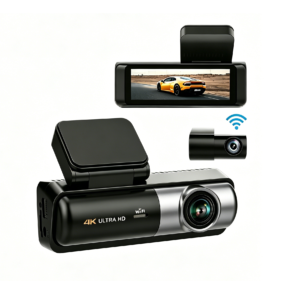
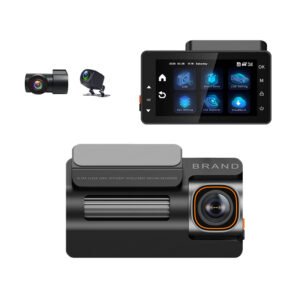
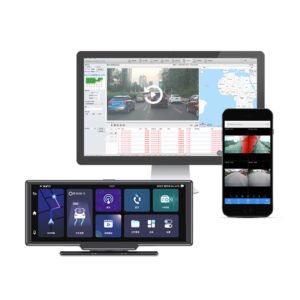
[…] Event upload is automatic: when the G-sensor, ADAS or DMS triggers, the device uploads a short clip (usually seconds before and after the event) at high quality — no human has to be watching. This is the footage that settles claims (how fleet operators use this in daily management). […]
[…] if you are managing a fleet rather than equipping cars. The economics and mechanics are in our fleet dash cam overview and how 4G dash cams […]