“Does this dash cam have WiFi?” and “Does it have 4G?” sound like the same question — both promise wireless connectivity. They are not the same thing at all. WiFi dash cams talk to your phone when you are standing next to the car. 4G dash cams talk to the internet from anywhere there is cellular signal. That one difference decides whether a camera is a personal gadget or a fleet-management device. Here is the full comparison.
How Each One Connects
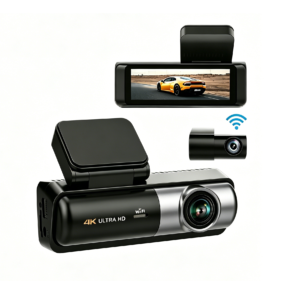
- WiFi dash cam: the camera creates (or joins) a short-range wireless network. You open the companion app on your phone within about 10 meters of the car to preview, download clips, change settings or share footage. No SIM card, no monthly fee, no data plan. It is essentially a wireless replacement for popping out the SD card.
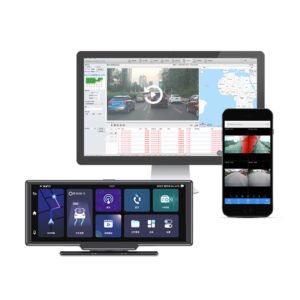
- 4G dash cam: the camera has a built-in cellular modem and a SIM card. It connects to the mobile network like a phone does — over any distance — and streams video, GPS position and event alerts to a cloud platform that managers view from anywhere in the world. It requires a data plan (usually a few GB/month of M2M/IoT data). For the full mechanics, see our what is a 4G dash cam and how does it work guide.
Side-by-Side Comparison
| Factor | WiFi Dash Cam | 4G Dash Cam |
|---|---|---|
| Range | ~10 m, must be near the car | Anywhere with cellular signal |
| SIM / data plan | None | Required (data-only IoT SIM) |
| Recurring cost | $0 | Data + optional platform fee per vehicle |
| Live remote viewing | No | Yes, real-time from anywhere |
| GPS tracking / geofence | GPS log on file only (no live) | Live map, routes, zone alerts |
| Event alerts | Only when you next connect | Push to manager in seconds |
| Evidence after a crash | Physically access the car/card | Auto-uploaded to cloud instantly |
| AI (ADAS/DMS) | Rare, on-device alerts only | Full AI with remote reporting |
| Fleet management | Not practical at scale | Built for it (CMSV6 platforms) |
| Unit price | Lower | Higher + ongoing costs |
| Best for | Private drivers, rideshare owner-operators | Fleets, logistics, taxi companies, insurers |
What WiFi Does Really Well (and Its Limits)
For a private driver, WiFi is usually the smarter buy: zero running cost, nothing to install beyond the mount, and quick clip downloads for insurance or police at the roadside. The catch is bandwidth and speed — 4K clips are large, so pay attention to the WiFi standard: 2.4GHz is slow for video transfer, 5GHz/5.8GHz is noticeably better, and Wi-Fi 6 is the current top end. And remember: WiFi cannot tell you anything about the car while you are away from it — parking alerts still rely on the camera’s local parking mode, not remote notification.
What 4G Does That WiFi Cannot
4G’s value is everything that happens without anyone standing next to the vehicle: live streaming of any truck in the fleet, second-by-second GPS tracking and geofence alerts, instant upload of collision/harsh-driving clips before the driver even reports, remote evidence retrieval when the car is hundreds of kilometers away, driver-behavior scoring and AI fatigue/phone-use (DMS) reporting, plus over-the-air firmware updates for hundreds of units at once. For the business case, see how 4G fleet cameras reduce accident costs and why fleets are moving to AI-connected cameras.
One More Option: WiFi + 4G Together
Many professional-grade 4G units also include WiFi. That combination is deliberate: the 4G link handles remote monitoring and event upload, while local WiFi lets a driver or installer download full-resolution clips and configure the device without burning cellular data. If you are specifying fleet hardware, dual-mode units are the flexible choice.
Which Should You Choose?
- Personal car, family car, single rideshare owner-driver: get a good WiFi 4K cam — you get easy clip access with zero monthly cost. Options: the value-tier YS01 2K with WiFi, the YS14 4K+1080P with 5.8G WiFi and 3.16″ screen, the YS16 true front & rear 4K, or the top YS15 triple channel with Wi-Fi 6 and Sony IMX675.
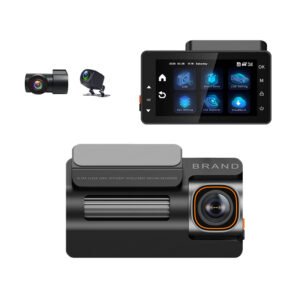
- Fleet, logistics, taxi company, insurer/telematics: you need 4G — WiFi cameras cannot be managed remotely at scale. Options: the flagship YC06 4G 4-channel with CMSV6 and optional ADAS/DMS, the 4-channel AI fleet cam, the 2K triple-channel fleet DVR, the YC03 4K front 4G dual-channel, or the compact YS09 4G LTE with remote live view.
Still deciding what matters most? Our dash cam buying checklist and is 4K worth it for everyday driving articles cover the camera itself; this article is only about how it connects.
Bottom Line
WiFi dash cams are for getting footage off the camera conveniently, at no ongoing cost, when you are at the car. 4G dash cams are for knowing what every vehicle is doing right now, from anywhere, with a data plan behind it. Pick WiFi for yourself; pick 4G for a business with vehicles on the road.
Stocking WiFi or 4G Dash Cams?
Yeshi Tech manufactures both: high-speed Wi-Fi personal dash cams (2.4/5.8GHz and Wi-Fi 6) and full 4G connected fleet recorders with CMSV6 cloud platforms, GPS tracking and optional ADAS/DMS. Distributors and fleet buyers get tiered pricing, OEM branding, IoT SIM options and samples. Tell us your market for a quote within 24 hours.
Email: sales01@yeshi3c.com
WhatsApp: +86 134 2511 8418
Address: Room 1006, Xianke Industry Building, Bagua 4th Rd, Futian District, Shenzhen, 518029, China