
A dash cam only helps if it is mounted in the right place — high enough to see the road, low enough not to block your view, and positioned so it is legal in your region. Mount it badly and you get glare, blocked vision, shaky footage or, in some places, a fine. The good news: there is a near-universal “correct” spot, and the legality rules are simple once you know them. Here is where to mount a dash cam, how to run the cable, and what the law says. For choosing the camera itself, see our dash cam buying guide.
The Best Mounting Position
The standard, recommended spot for the front camera is:
- High on the windshield, just behind and slightly below the rear-view mirror, on the passenger side of the mirror stalk.
- Tucked up near the headliner / top of the glass so it sits mostly out of your forward line of sight.
- Centred left–right as much as possible for a balanced view of the road and both lanes.
This position gives the camera the highest, widest forward view while hiding it behind the mirror from the driver’s seat — which also makes it discreet from outside (less theft temptation). Aim the lens so the horizon sits around the middle of the frame with a little sky and mostly road; most cameras have an alignment screen or app preview to set this.
Why Behind the Mirror Beats the Dashboard or Low Corner
- Least obstruction to the driver — high and behind the mirror keeps the camera out of your eyeline to the road.
- Best field of view — a high, central position captures more of the road ahead and less dashboard.
- Less glare and reflection — up near the top reduces dash-top reflections; a polarising filter helps further in bright sun.
- Discreet / theft-deterrent — a small wedge camera behind the mirror is barely noticeable (this matters for rideshare too — see our rideshare guide).
Adhesive vs Suction Mount
- Adhesive (3M-style) mount — the preferred choice for a permanent install: smaller, lower-profile, more stable (less shake), and less likely to fall off in heat. Most modern wedge cams ship with these.
- Suction mount — handy if you move the camera between cars, but bulkier and more prone to vibration and detaching in extreme heat over time.
Clean the glass with alcohol and fit the mount to a warm, dry windshield for best adhesion.
Rear and Cabin Cameras
- Rear camera — mount high and centred on the rear windshield (inside), facing back, for the widest view; route the cable along the headliner and down a side pillar. More on coverage in front-only vs front-and-rear and the channel count explainer.
- Cabin (interior) camera on 3-channel setups — position on the front windshield or dash aimed to frame the back seats/passengers; IR models record clearly in the dark.
Running the Cable Cleanly
- Plug the power lead into the camera, then tuck the cable up into the headliner along the top of the windshield.
- Run it down the A-pillar (tuck behind the plastic trim), along the door seal/sill, and across to the power source.
- Power from the cigarette-lighter socket (simplest) or a hardwire kit to the fuse box for a hidden install and parking mode. Hardwiring also enables 24/7 parking recording with a low-voltage cutoff so the battery is protected — covered in our parking mode & hardwire guide and battery drain guide.
A pro install hides every cable in minutes; DIY trim tools make it easy and avoid leaving a wire dangling across the glass.
Is a Dash Cam Legal? (The Short Answer: Yes, Almost Everywhere — With Conditions)
Dash cams are legal to own and use in the vast majority of countries (the US, UK, EU, China, Australia and most others), and footage is routinely accepted by insurers and courts. But there are two recurring conditions:
- Don’t obstruct the driver’s view. Many regions have windshield-obstruction rules: devices must be mounted within a defined area (commonly behind the rear-view mirror, in the lower corner of the passenger side, or within a set number of inches from the frame) and must not block a defined portion of the driver’s view. This is exactly why the behind-the-mirror spot is recommended — it satisfies most obstruction rules.
- Audio / privacy consent in some places. Recording video of public roads is broadly permitted, but a handful of regions/countries (and some rideshare rules) require consent or a notice before recording audio of people inside the car, and some have stricter rules on recording identifiable individuals. If you carry passengers or drive in a privacy-strict market, check local rules and consider a small “recording in progress” notice; you can also disable the microphone.
Rules vary by country and US state, so for a definitive answer check your local traffic/privacy law — the two things that get people in trouble are a camera mounted in the driver’s line of sight, and (rarely) undisclosed audio recording.
Quick Placement Checklist
- ✅ Front cam high behind the rear-view mirror, passenger side, horizon centred.
- ✅ Glass cleaned with alcohol; adhesive mount for a fixed install.
- ✅ Rear cam high/centred on rear glass; cabin cam framing the back seat.
- ✅ Cables tucked into headliner/A-pillar; hardwire kit for hidden power + parking mode.
- ✅ Camera clear of wiper sweep? Actually within the wiper area so the view stays clear in rain.
- ✅ Not blocking the driver’s view; check local audio-consent rules if carrying passengers.
The Short Version
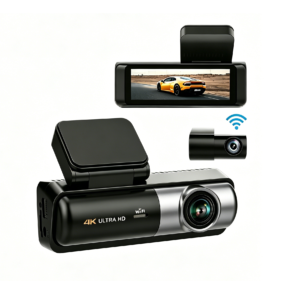
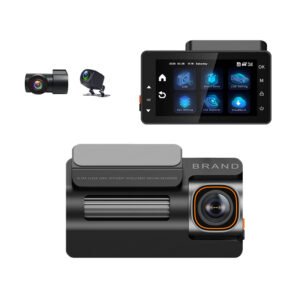
Mount the front camera high on the windshield, tucked behind the rear-view mirror on the passenger side, with the horizon centred; use an adhesive mount, put the rear camera high on the back glass, and tuck all cabling into the trim (hardwire for parking mode). Dash cams are legal nearly everywhere as long as the camera doesn’t obstruct your view and you respect local audio/privacy consent rules. Compact, discreet models like the YS15 triple-channel, YS13 triple-channel and dual YS14 are designed to sit almost invisibly in exactly this spot.
Discreet, Easy-Mount Dash Cams — Driver, Fleet and Wholesale Pricing
Yeshi Tech supplies compact wedge-style dash cams with adhesive mounts, discreet rear/cabin cameras and optional hardwire parking kits — for drivers, fleets, distributors and OEM partners. Tell us your market and quantities — quote within 24 hours.
Email: sales01@yeshi3c.com
WhatsApp: +86 134 2511 8418
Address: Room 1006, Xianke Industry Building, Bagua 4th Rd, Futian District, Shenzhen, 518029, China
[…] Most dash cams can record sound as well as video — but whether they do by default, whether you should leave it on, and whether it is even legal where you drive are questions a surprising number of buyers never think about until a passenger asks “is this thing recording me?” This guide explains how dash cam audio works, when it is useful, the privacy and consent rules around it, and how to set it up properly (especially for rideshare and fleet drivers). For placement and the broader legality of the camera itself, see our mounting & legal placement guide. […]