
“If I leave a dash cam plugged in, will my car not start in the morning?” It is one of the most common questions buyers ask — and the short answer is: a properly installed dash cam will not drain a healthy car battery. The camera uses very little power while driving, and the risk only appears when you run it while parked. Even then, the problem is solved with the right wiring and a simple safety cutoff. Here is exactly how dash cam power works, when battery drain is a real risk, and how to set it up so you never get stranded. For the full feature checklist, see our dash cam buying guide.
How Much Power Does a Dash Cam Actually Use?
Very little. A typical dash cam draws roughly 200–500 mA at 5 V while recording — around 2.5–5 watts. Compared to a car battery’s capacity (a small car battery is ~45–60 Ah at 12 V, i.e. hundreds of watt-hours), the camera is a tiny load. While the engine is running, the alternator powers the camera and recharges the battery, so normal driving uses essentially none of your battery. Drain is simply not a concern in day-to-day driving.
When Drain Becomes a Real Question: Parking Mode
The issue is parking mode — recording (or standing by to record bumps) while the engine is off and the car is parked. Now the camera is running on the battery with no alternator topping it up, sometimes for days. Two things determine whether this is safe:
- How the camera is powered (cigarette-lighter plug vs hardwire kit vs battery pack).
- Whether there is a low-voltage cutoff to protect the starting battery.
The full wiring options are compared in our parking mode & hardwire kit guide; here is the battery side of the story.
The Three Power Options — and Battery Risk
| Power source | Parking recording? | Battery drain risk |
|---|---|---|
| Cigarette-lighter plug | Usually no (socket switches off with engine) | None — but no parking cover. If your socket stays live with ignition off, camera runs on battery unprotected — avoid. |
| Hardwire kit (fuse box) | Yes — constant + switched feeds | Safe with low-voltage cutoff; without one, possible flat battery over long parks. |
| Dedicated battery pack / power bank | Yes | Zero risk to car battery — camera runs from its own pack. |
The Key Protection: Low-Voltage Cutoff
A proper hardwire kit includes a voltage monitor that cuts power to the camera if the car battery drops below a set threshold (typically ~11.8–12.0 V, adjustable). This guarantees enough reserve is left to start the engine. In practice it means:
- Short parks (hours, overnight) on a healthy battery — the camera records bumps with the cutoff as a safety net.
- Long parks (days, airport trips) — the cutoff trips before the battery is harmed; the camera simply stops recording once the safe floor is reached. You protect the battery first, which is the correct trade-off.
Modern cameras in parking mode also use buffered or impact-triggered standby — they sit in a low-power state and only fully record when the G-sensor detects a bump — so the average draw while parked is far lower than while driving. Set the cutoff conservatively (higher threshold, ~12.0 V) in winter, because cold weather reduces battery capacity.
Supercapacitor vs Internal Battery
Note the difference between a dash cam’s own internal power and the car battery. Many quality dash cams use a supercapacitor instead of a small lithium battery: it only holds enough charge to save the last file safely when power cuts, handles extreme heat, and does not swell in a hot windshield. It does not run parking mode — that still draws from the car or an external pack. See supercapacitor vs lithium battery for why supercapacitor models are more reliable.
Practical Rules to Never Get a Flat Battery
- ✅ Use a hardwire kit with low-voltage cutoff for parking mode — never rely on an always-live cigarette socket without protection.
- ✅ Set the cutoff to ~12.0 V (higher in cold weather) so starting reserve is always protected.
- ✅ Keep your car battery healthy — an old or weak battery is the real cause of “the dash cam drained my car”; a fresh battery handles parking mode easily.
- ✅ For long-stay or airport parking, either accept that recording stops at the cutoff, or use a dedicated dash cam battery pack for zero impact.
- ✅ Fleets: a camera that drains a driver’s battery is a support call — specify hardwire kits with cutoff on every install (see fleet dash cam considerations).
What About 4G / Cloud Cameras?
Connected cameras that upload clips over cellular (Wi-Fi vs 4G explained) use slightly more power when transmitting, but the same rules apply — while driving they run on the alternator, and in parking mode the hardwire cutoff still protects the battery. Cloud upload does not meaningfully change the battery math.
The Short Version
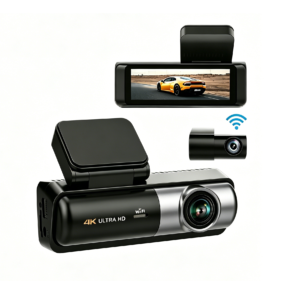
While you drive, a dash cam draws a few watts and runs on the alternator — it will not drain your battery. The only real risk is parking mode on an unprotected always-on socket; solve it with a hardwire kit that has a low-voltage cutoff (or a separate battery pack), keep your car battery in good shape, and you get 24/7 recording with zero chance of a no-start. Quality Yeshi Tech cameras such as the 4K triple-channel YS15, dual-channel YS14 and value YS02 support hardwire parking mode with voltage protection. Pair it with a good high-endurance memory card and the setup looks after itself.
Dash Cams with Safe Parking Mode — Driver, Fleet and Wholesale Pricing
Yeshi Tech supplies supercapacitor dash cams with low-voltage-protection hardwire kits — so you get 24/7 parking surveillance without a dead battery. 4K, 3-channel and 4G connected models for drivers, fleets, distributors and OEM partners. Tell us your market and quantities — quote within 24 hours.
Email: sales01@yeshi3c.com
WhatsApp: +86 134 2511 8418
Address: Room 1006, Xianke Industry Building, Bagua 4th Rd, Futian District, Shenzhen, 518029, China

[…] Here is a spec-sheet term that quietly decides how long a dash cam lasts: some run on an internal lithium-ion battery, others on a supercapacitor. Both do the same basic job — keep the camera alive long enough to save the current clip when power cuts out — but they behave very differently in a parked car in summer. Cabin temperatures can hit 70–80°C (160–175°F) in direct sun, and that is brutal on lithium batteries. This guide explains the difference, why it matters for reliability and safety, and which to choose. For how the camera is powered while parked (and why it won’t flatten your car battery), see our battery drain guide. […]