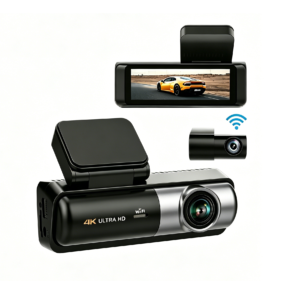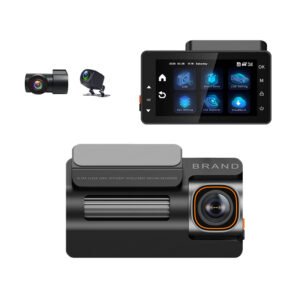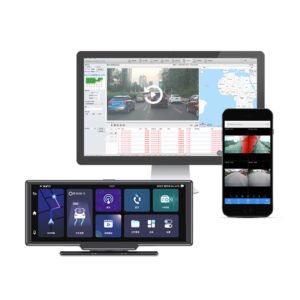
Buying a dash cam for yourself is a gadget decision. Buying dash cams for a business — ten vans, fifty trucks, a taxi fleet, or a container-load for resale — is a procurement decision, and the criteria are completely different. Unit price is almost not at the top of the list. Reliability, platform fit, evidence quality, warranty process and total cost at scale are. This guide walks business buyers through the decision in the order that actually matters, with a recommended spec for each common business type.
Step 1: Decide Whether You Need Connected (4G) Cameras at All
This is the biggest fork in the road, and it is about who needs to see the footage and when:
- Go 4G-connected if you run multiple vehicles and need live location, remote evidence retrieval, instant incident alerts, driver scoring or geofencing — in other words, if you are managing a fleet rather than equipping cars. The economics and mechanics are in our fleet dash cam overview and how 4G dash cams work.
- Wi-Fi / standalone cameras are fine if the vehicles are driven by owners or you only need evidence after the fact (e.g. small operator fleets, company cars, rental cars, or retail stock for resale to private buyers). Wi-Fi cannot do remote monitoring — the difference is explained in WiFi vs 4G dash cams.
Rule of thumb: more than ~10–15 vehicles, or any safety/insurance program → 4G.
Step 2: Pick the Number of Channels by What Can Go Wrong
Channels = camera directions, recorded in sync. Choose by where your incidents and liabilities actually come from (full 4-channel breakdown):
- 1–2 channels (front, or front + rear): company cars, light service fleets, retail/private-label stock.
- 3 channels (front + rear + IR cabin): rideshare, taxis, passenger transport — the cabin camera settles passenger disputes and monitors the driver.
- 4 channels (adds side/cargo/second cabin): trucks, buses/coaches, hazmat, cash-in-transit, high-value cargo — anywhere blind spots or load security carry real liability.
Step 3: Decide How Much AI You Need (ADAS / DMS)
AI is no longer optional on high-risk fleet specs — but not every business needs the full stack (ADAS and DMS explained):
- DMS (driver-facing: fatigue, phone, smoking, seatbelt) — highest ROI for long-haul, coaches, night work and any fleet where driver behavior drives claims. See DMS vs traditional cameras.
- ADAS (road-facing: forward collision, lane departure, pedestrian) — strongest in urban delivery, dense traffic and stop-and-go routes.
- Both — the standard safety spec for hazardous, regulated or high-value operations. The strategic case is laid out in why fleets are moving to AI cameras.
Step 4: Set the Evidence Spec (Resolution, Durability, Storage)
- Resolution: 4K front for trucks/highway work where plates matter at distance; 2K is genuinely adequate for urban/low-speed and keeps storage and heat down. Pixel trade-offs are quantified in our 1080p vs 2K vs 4K comparison.
- Heat durability: insist on supercapacitor units for vehicles parked outdoors or operating in hot climates — internal lithium batteries swell and fail in fleet duty cycles.
- Storage: spec high-endurance cards (or built-in eMMC on premium fleet DVRs), and decide who manages cards vs cloud uploads — connected fleets rely on event upload to the platform, not manual card collection.
- Install: fleet deployments are hardwired (fuse box) with professional routing for rear/cabin/sides — budget install time per vehicle.
Step 5: The Commercial Checklist (Where Business Buying Differs)
- Certifications for your markets: CE / FCC / RoHS, UKCA for Britain — require paperwork, not promises.
- Platform: confirm the cloud platform (e.g. CMSV6-compatible), account provisioning, admin accounts, data hosting and any per-vehicle subscription — and how live view actually performs (remote live view mechanics).
- Warranty and RMA: warranty length (look for 12–18 months), advance-replacement or spare-unit policy, and who pays shipping on defects.
- OEM / private label: logo printing, custom packaging, branded firmware/startup screen, MOQ tiers (typically ~500 units for full OEM) — details in our OEM fleet solution overview.
- Samples and lead times: order evaluation units before volume; expect 7–15 day lead times on bulk production.
- Total cost of ownership: unit + data SIM plans + platform fees + install + warranty — then offset against the accident/insurance/fuel savings documented in how 4G cameras reduce accident costs.
Recommended Spec by Business Type
- Trucking / long-haul logistics: YC06 4G 4-channel or the 4-channel AI cam with full ADAS+DMS — cabin DMS for fatigue, side/cargo channels, live platform.
- Buses / coaches / passenger transport: 4-channel AI with DMS — passenger safety compliance plus driver monitoring.
- Rideshare / taxi fleets: 2K triple-channel 4G DVR (road + rear + IR cabin) — the cabin channel is the product; add DMS for driver-policy enforcement.
- Urban delivery / vans / service fleets: YC03 4K front 4G dual-channel or YC04 2K 4G — ADAS-oriented, platform-managed.
- Construction / mining / hazmat / high-risk: 4-channel AI with ADAS+DMS plus geofencing and live alerts.
- Insurance / telematics partners: 4G platform units (YC-series) with API/SDK access for claims integration — ask about data feeds.
- Company cars / small business fleets (no platform needed): YS03 compact 4K with GPS or YS04 fleet 4K with TPMS — discreet, reliable, evidence-grade.
- Retail / distributors stocking for resale: mix a value Wi-Fi tier (YS-series triple channel and dual 4K models) with a 4G fleet tier (YC-series) to cover both buyer walks; full OEM/private-label available.
- Entry-level connected tracking: YS09 4G LTE with remote live view for budgets where full multi-channel fleet units are too much.
The Decision in One Paragraph
Start from your risk: if drivers and vehicles are your liability, buy 4G fleet cameras on a CMSV6-type platform with channel count matched to where your incidents happen (3 for passenger vehicles, 4 for trucks and high-risk), add DMS for fatigue-heavy operations and ADAS for urban routes, demand supercapacitor durability and market certifications, and evaluate the supplier’s warranty, platform and OEM terms before comparing unit prices. Then pilot a handful of units in real service before the volume order — every fleet’s routes and workflows are different, and the right spec is the one your managers will actually use.
Buying Dash Cams for a Business? Let Us Spec It With You
Yeshi Tech supplies fleets, rideshare operators, insurers, telematics partners and distributors — 2K/4K, 1–4 channels, Wi-Fi and 4G/CMSV6, optional ADAS/DMS, with CE/FCC/RoHS/UKCA certification, tiered wholesale pricing, OEM/private-label programs, platform accounts, IoT SIM options, warranty/RMA support and samples. Tell us your vehicle types, fleet size and market — we will come back with a recommended model list and quote within 24 hours.
Email: sales01@yeshi3c.com
WhatsApp: +86 134 2511 8418
Address: Room 1006, Xianke Industry Building, Bagua 4th Rd, Futian District, Shenzhen, 518029, China